
7 Proven Borewell Water Problem Solutions for Chennai’s Salinity Issues
7 Proven Borewell Water Problem Solutions for Chennai’s Salinity Issues | borewell water problem solutions chennai
Let’s be blunt. Drilling a borewell in Chennai is a gamble. You invest lakhs, hold your breath, and pray the water that gushes out doesn’t taste like you’re gargling seawater from Besant Nagar beach. I’ve been in this business for over 15 years, and the number of frantic calls I get about salty, hard, or muddy water is staggering. The truth is, many of these issues are preventable or fixable. The key is to stop guessing and start applying proven hydrogeological science. If you’re facing these issues, you’re not alone, and there are absolutely effective borewell water problem solutions in Chennai that go beyond just installing a bigger RO filter. borewell water problem solutions chennai plays a direct role in how this strategy performs in real-world conditions.
Quick Answers: Your Fastest Path to Better Borewell Water — borewell water problem solutions chennai
Don’t have time for the full deep dive? Here are the key takeaways you need to know:
- Test Before You Drill: A hydrogeological survey isn’t an expense; it’s insurance against drilling a dry or saline well.
- Isolate the Problem: Salinity often comes from upper water layers. Advanced casing and grouting can seal off these contaminated zones.
- Recharge Your Aquifer: Rainwater harvesting is the single most effective long-term strategy to dilute salinity and improve your groundwater level.
- Revive, Don’t Re-drill: Techniques like hydrofracturing can often bring a failing borewell back to life by accessing new freshwater fissures.
- Cleanliness is Key: Regular borewell flushing prevents mineral buildup that degrades water quality and reduces pressure.
First, Stop Guessing: The Non-Negotiable Step of a Hydrogeological Survey for borewell water problem solutions chennai
Before we even talk about solutions, we have to talk about diagnostics. The single biggest mistake I see homeowners and even developers make is drilling blind. They pick a spot based on a hunch or where the neighbor drilled. It’s a recipe for disaster. A proper hydrogeological survey is the most critical of all borewell water problem solutions in Chennai because it prevents the problem in the first place.
What is a Hydrogeological Survey?
This isn’t just dowsing with a stick. We’re talking about a scientific analysis of the ground beneath your property. The most effective method we use is Vertical Electrical Sounding (VES). It works by passing a small electrical current through the ground to measure resistivity. Different materials—clay, sand, hard rock, freshwater, and saltwater—all have unique electrical signatures. This data allows us to create a 2D map of the subsurface layers.
Why It’s a Game-Changer for Chennai
In my experience, this is what a survey tells us:
- Depth of Aquifers: Identifies exactly how deep you need to go to hit a viable water-bearing zone.
- Water Quality Prediction: Critically, it can distinguish between freshwater and saline aquifers. We can literally see the layers and advise on drilling depth to target the fresh and case off the salt.
- Fracture Zone Identification: In hard rock areas common in Chennai’s outskirts, it pinpoints the cracks and fissures that actually hold the water.
Think of it this way: drilling without a survey is like performing surgery without an X-ray. You might get lucky, but the risks are enormous. Investing in proper {{internal_link:soil testing for borewell in Chennai}} can save you ten times the cost and a massive headache down the line.
Solution 1: Isolate the Enemy with Advanced Casing & Grouting for borewell water problem solutions chennai
Often, the problem isn’t that your entire aquifer is salty. The issue is contamination from upper, saline water sources seeping into your well. This is especially common in coastal areas like ECR, Adyar, and Thiruvanmiyur due to seawater intrusion. The solution is to build a fortress around your freshwater stream.
Multi-Layer Casing Explained
A basic borewell might just have one long pipe. A professionally constructed one, especially in a saline-prone area, uses a multi-casing technique. Here’s how it works:
- Surface Casing: A wider diameter pipe is installed through the topsoil and loose, often contaminated, upper water tables.
- Grouting: The space around this outer casing is filled with a sealing material like cement grout or bentonite clay. This creates an impermeable barrier, effectively blocking the upper saline water from moving downwards.
- Inner Casing: A narrower pipe is then run down to the target freshwater aquifer. This pipe is only perforated (has slots) at the level of the desired freshwater zone.
This method ensures that the only water entering your pump is from the deep, clean aquifer you paid to reach. It’s a technical solution that requires precision, and it’s a hallmark of the best borewell company in Chennai—they don’t cut corners on casing.
Solution 2: Dilute and Conquer with Rainwater Harvesting & Aquifer Recharge
This is my favorite solution because it’s sustainable, environmentally positive, and incredibly effective over the long term. If your borewell water has gradually become saltier, it’s a sign that the aquifer is stressed and the ratio of freshwater to dissolved salts is decreasing. You can actively reverse this.
How Managed Aquifer Recharge (MAR) Works
The principle is simple: capture the immense amount of rainwater that falls on your roof and property and direct it back into the ground near your borewell. This does two things:
- Dilutes Salinity: The pure, salt-free rainwater mixes with the groundwater, gradually lowering the overall Total Dissolved Solids (TDS) and salinity.
- Raises Water Table: It replenishes the aquifer, combating the effects of over-extraction and ensuring a more stable water supply, even in dry months.
A typical recharge pit involves a dug-out area filled with layers of filtering media like large stones, gravel, and coarse sand. This cleans the rainwater before it percolates down to recharge the aquifer. It’s a natural, powerful method to address the root cause of many borewell water problem solutions in Chennai.
Solution 3: Revive Low-Yield Wells with Hydrofracturing
What if your borewell yield has dropped significantly or the water has turned saline over time? Before you consider the massive expense of drilling a new well, you should look into hydrofracturing. This is a highly effective rehabilitation technique for existing borewells, especially those in hard rock formations.
A Quick Note: This is NOT the same as fracking for oil and gas. Water well hydrofracturing uses only high-pressure water, no chemicals, to safely stimulate the well.
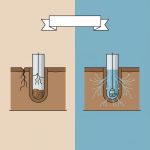
The process involves injecting water at extremely high pressure into the borewell. This pressure forces open and cleans out the existing network of fractures and fissures in the rock that feed water into your well. It can also create new pathways, connecting your well to previously isolated pockets of freshwater. I’ve seen wells go from yielding 200 litres per hour to over 2000 after a successful hydrofracturing procedure. It’s a specialized service, but it can be the most cost-effective solution for a failing well.
Solution 4: Address Pressure and Quality with Borewell Flushing & Cleaning
Sometimes the problem isn’t the aquifer at all; it’s the well itself. Over years of use, borewells can accumulate silt, sand, clay deposits, and mineral scaling on the casing walls and in the fractures. This buildup can cause a host of issues:
- Reduced Water Flow: The sediment clogs the entry points, leading to frustratingly low water pressure issues in a borewell.
- Poor Water Quality: The buildup can harbor bacteria and release minerals, causing bad taste, odor, and turbidity (muddiness).
- Pump Damage: Abrasive sand and silt can wear out your submersible pump prematurely, leading to expensive repairs.
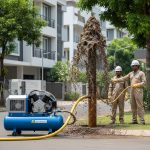
A professional cleaning, often using a high-pressure air compressor (a method called airlifting), forcefully flushes out all this accumulated debris from the bottom of the well and scours the casing walls clean. If you’re searching for ‘borewell cleaning near me‘, you’re likely facing this exact issue. We recommend a routine cleaning every 2-3 years as preventative maintenance.
What We See in Practice: A Real-World Chennai Case Study
Theory is one thing, but results are what matter. Let me walk you through a common scenario. A client with a 10-year-old apartment complex in Pallikaranai called us. Their 450-foot borewell, which once gave sweet water, was now pumping out water with a TDS of over 2500 ppm—unusable for anything but flushing. The residents were spending a fortune on water tankers.
Instead of just quoting a new well, we proposed a multi-step diagnostic and solution plan:
- Camera Inspection: We first ran a camera down the well. This revealed significant iron scaling on the casing and a large amount of silt at the bottom.
- High-Pressure Flushing: Our team performed a thorough flushing, which immediately improved the clarity and reduced the TDS to around 1900 ppm. Better, but still not good enough.
- Hydrofracturing: Based on the original drilling log, we knew there were deeper rock fractures. We performed hydrofracturing at 400 feet.
- The Result: After allowing the well to settle, the new TDS reading was 1100 ppm. A massive improvement.
- Long-Term Plan: We then helped them implement a rainwater harvesting system to feed two large recharge pits. A year later, their TDS is consistently below 800 ppm, and they’ve cut their water tanker budget by 70%.
This is the power of a comprehensive approach. It’s not about one magic bullet; it’s about using the right combination of borewell water problem solutions in Chennai to fit the specific situation.
Solution 5: When All Else Fails – Point-of-Use Water Treatment
Let’s be honest. In some areas, particularly those extremely close to the coast or with unique geological challenges, the source water will always have high salinity. After you’ve done everything possible to improve the well itself, the final step is point-of-use treatment.
- Reverse Osmosis (RO) Systems: These are the gold standard for reducing TDS and salinity. They force water through a semi-permeable membrane that filters out dissolved salts and impurities.
- Water Softeners: If your main issue is hardness (high calcium and magnesium content) which causes scaling on pipes and fixtures, a water softener is the right tool. It uses an ion exchange process to remove these minerals.
My honest opinion? An RO system is a fix for the water coming out of your tap, not a fix for your borewell. It treats the symptom. It’s an essential tool in many Chennai homes, but it should be the last line of defense after you’ve optimized the health of your water source through proper {{internal_link:borewell services in Chennai}}.
Your Next Step to Clean, Reliable Water
Dealing with borewell problems can feel overwhelming. The salty taste, the low pressure, the constant worry about your water supply—it’s a major source of stress for any property owner in Chennai. But guesswork and quick fixes will only lead to more frustration and wasted money.
The path to a reliable water source starts with a clear diagnosis and a strategic plan. You need an expert who understands Chennai’s complex geology and has the right tools and experience to implement the right solution.
Tired of salty water and uncertainty? Stop gambling with your water supply. {{internal_link:Contact Samy Borewell today for a complete borewell assessment}}. We’ll provide a data-driven analysis and a clear, actionable plan to restore clean, fresh water to your home or business.
Frequently Asked Questions (FAQs)
- How can I reduce salt in my borewell water naturally?
The most effective natural method is Managed Aquifer Recharge (MAR) through rainwater harvesting. By directing rooftop rainwater into a recharge pit near your borewell, you dilute the existing saline water over time and replenish the freshwater aquifer. - What is the cost of soil testing for a borewell in Chennai?
While costs vary based on location and depth, a hydrogeological survey typically costs only a small fraction of drilling a new borewell. It’s a vital investment that can save you lakhs by preventing the drilling of a dry or saline well. - Can a salty borewell become good again?
Yes, in many cases. Techniques like hydrofracturing can connect the well to new freshwater sources. Proper casing can seal off saline layers, and long-term rainwater harvesting can gradually reduce salinity in the entire aquifer. - How do I fix low water pressure in my borewell?
Low pressure can be caused by several factors: a failing pump, blockages in the well from silt or mineral buildup, or a declining water table. A professional inspection, including a camera survey and yield test, is needed to diagnose the exact cause. - What is the main cause of salty borewell water in Chennai?
The primary causes are seawater intrusion in coastal areas and the presence of natural saline clay and rock layers in the subsurface geology. Over-extraction of groundwater worsens this problem by pulling saline water into freshwater aquifers. - How often should a borewell be cleaned?
For optimal performance and water quality, we recommend a professional cleaning and flushing every 2 to 3 years. If you notice a sudden drop in pressure or change in water color or taste, you should have it inspected immediately.
A practical way to evaluate borewell water problem solutions chennai is to compare fit, budget, timing, warranty terms, and after-sales support before making a shortlist.
For local buyers, borewell water problem solutions chennai should be judged by total value, not just the first quoted number or the most attractive discount.
Frequently Asked Questions
How can I reduce salt in my borewell water naturally?
The most effective natural method is Managed Aquifer Recharge (MAR) through rainwater harvesting. By directing rooftop rainwater into a recharge pit near your borewell, you dilute the existing saline water over time and replenish the freshwater aquifer.
What is the cost of soil testing for a borewell in Chennai?
While costs vary based on location and depth, a hydrogeological survey typically costs only a small fraction of drilling a new borewell. It’s a vital investment that can save you lakhs by preventing the drilling of a dry or saline well.
Can a salty borewell become good again?
Yes, in many cases. Techniques like hydrofracturing can connect the well to new freshwater sources. Proper casing can seal off saline layers, and long-term rainwater harvesting can gradually reduce salinity in the entire aquifer.
How do I fix low water pressure in my borewell?
Low pressure can be caused by several factors: a failing pump, blockages in the well from silt or mineral buildup, or a declining water table. A professional inspection, including a camera survey and yield test, is needed to diagnose the exact cause.
What is the main cause of salty borewell water in Chennai?
The primary causes are seawater intrusion in coastal areas and the presence of natural saline clay and rock layers in the subsurface geology. Over-extraction of groundwater worsens this problem by pulling saline water into freshwater aquifers.
How often should a borewell be cleaned?
For optimal performance and water quality, we recommend a professional cleaning and flushing every 2 to 3 years. If you notice a sudden drop in pressure or change in water color or taste, you should have it inspected immediately.