
Step-by-Step: The Borewell Flushing Process in Chennai Explained
Step-by-Step: The Borewell Flushing Process in Chennai Explained
If you’re living in Chennai, you know the drill: summer hits, the groundwater table dips, and suddenly your taps are gasping for air or spitting out muddy, silt-heavy water. Most homeowners assume their well has run dry, but in my 15 years of field experience, I’ve found that nearly 40% of the time, the issue isn’t a lack of water—it’s a choked well. The borewell flushing process in chennai is often the only thing standing between you and a very expensive, unnecessary new drilling project.
At Samy Borewell, we’ve seen everything from fine clay deposits in OMR to hard rock silt in Velachery. The truth is, Chennai’s soil profile is incredibly diverse, and a one-size-fits-all cleaning approach simply doesn’t work. Whether you’re dealing with water pressure issues borewell owners frequently report or a complete blockage, understanding the technical steps of flushing can save you thousands of rupees and weeks of headache.
Quick Answer: What is Borewell Flushing? — borewell flushing process in chennai
Borewell flushing is a high-pressure maintenance procedure that uses a high-capacity air compressor to inject air into the well, forcing out accumulated silt, debris, and stagnant sludge to restore natural water flow. It typically takes 4 to 8 hours and should be performed every 3 to 5 years depending on your local soil conditions.
Why Your Chennai Borewell Needs Regular Flushing for borewell flushing process in chennai
I often tell my clients that a borewell is like the lungs of your home; if the pores are clogged with dust, it can’t breathe. In Chennai, the high iron content in certain areas and the fine alluvial soil in others create a ‘sludge’ that settles at the bottom. Over time, this sediment covers the water-bearing fissures (the cracks in the rock where water comes from), effectively sealing off your supply.
When you notice water pressure issues borewell performance dropping, it’s usually a sign that the yield is being throttled. If you ignore it, that silt eventually gets sucked into your submersible pump. I’ve seen high-end pumps worth 30,000 rupees burn out in seconds because a pebble or excessive sand got lodged in the impellers. Regular borewell cleaning methods in chennai aren’t just about water; they’re about asset protection.
The Technical Borewell Flushing Process in Chennai: Step-by-Step
We don’t just drop a pipe and hope for the best. A professional borewell flushing process in chennai requires a systematic approach to ensure the casing pipe isn’t damaged while maximizing the debris removal. Here is how we handle it at Samy Borewell.
Step 1: Initial Depth and Yield Assessment
Before any machinery starts, we measure the current depth. If your original bore was 300 feet but our weight stops at 260 feet, we know we have 40 feet of ‘dead’ silt to clear. This is where soil testing for borewell chennai data becomes useful, as it tells us if we’re fighting soft clay or hard rock fragments.
Step 2: Compressor Setup and Pipe Lowering
We use high-pressure air compressors (usually 300 to 450 PSI). We lower a specialized flushing pipe—not your regular delivery pipe—to the very bottom. This is a critical distinction. Many amateur borewell services near me only clean the top layer; we go to the bed to ensure every ounce of sludge is agitated.
Step 3: High-Pressure Air Injection (The ‘Surge’ Phase)
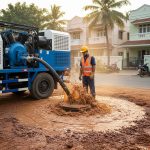
This is the ‘heart’ of the borewell flushing process in chennai. We blast air into the well in controlled bursts. This creates a massive pressure differential that forces the water and debris upward. You’ll see a geyser of muddy, black, or brown water erupting from the casing. We continue this until the water runs crystal clear—which can take anywhere from two to five hours.
Step 4: Fissure Opening and Yield Testing
Once the water is clear, we don’t stop. We perform ‘surging’ to specifically target the water-bearing zones. This helps clear the ‘skin’ of the borewell walls, allowing water to seep in faster. It’s the difference between a ‘clean’ well and a ‘high-yield’ well.
What We See in Practice: A Case Study from Madipakkam
Last year, a residential complex in Madipakkam called us. They were convinced they needed a new 600-foot bore because their current 250-foot well was dry. After our initial assessment, I noticed the pump was covered in fine, grey silt. Instead of drilling, we recommended a deep borewell flushing process in chennai. After six hours of flushing, we cleared nearly 15 feet of packed clay. The water yield jumped from 0.5 inches to a full 2-inch flow. We saved that association over 1.5 lakhs in drilling costs.
How to Choose Borewell Contractor in Chennai
Don’t just hire the cheapest guy with a truck. Here is my expert framework for vetting a professional:
- Equipment Quality: Ask if they use a high-pressure compressor (above 300 PSI). Low-pressure units won’t clear deep-seated silt.
- Experience with Local Geology: A contractor who knows the difference between the rocky terrain of Pallavaram and the sandy beds of ECR is invaluable.
- Transparent Pricing: Ensure they quote based on the depth or a flat service fee, not ‘per hour’ which can lead to padded bills.
- Post-Service Support: Will they help re-install your pump and check the electricals? At Samy Borewell, we consider the job done only when the water is back in your overhead tank.
Expert Framework: When to Flush vs. When to Re-Drill
Look, I’ll be honest—flushing isn’t a miracle cure for a dry aquifer. If the entire neighborhood’s water table has dropped by 100 feet, cleaning your well won’t bring the water back. However, if your neighbors have water and you don’t, or if your water has become increasingly ‘dirty,’ flushing is your best bet. We use a simple benchmark: if your well depth has decreased by more than 5% due to silt, it’s time for a professional borewell flushing process in chennai.
Frequently Asked Questions
How long does the borewell flushing process take?
For most residential wells in Chennai (200-400 feet), the process takes between 4 to 6 hours. Deeper commercial wells may take a full day.
Will flushing damage my existing borewell casing?
Not if done correctly. We use controlled pressure levels. However, if your casing is very old (PVC from 20+ years ago), we perform a visual inspection first to ensure it can handle the vibration.
How much does borewell cleaning cost in Chennai?
Prices vary based on depth and location, but typically range from ₹5,000 to ₹12,000 for standard residential setups. It is a fraction of the cost of {{internal_link:borewell drilling near me}} services.
Can I use the water immediately after flushing?
I recommend letting the well settle for 2 hours, then running the pump for 15 minutes to clear any residual fine particles before diverting it to your RO system or overhead tank.
How often should I look for borewell cleaning near me?
In Chennai’s clay-heavy areas, every 3 years is ideal. In rocky areas, you can often go 5 years between cleanings.
The Bottom Line on Borewell Health
Maintaining a borewell in a city like Chennai isn’t just a luxury; it’s a necessity for water security. Don’t wait until your pump burns out or your tanks are empty. A proactive borewell flushing process in chennai is the most cost-effective way to ensure your family has access to clean, pressurized water year-round. If you’re noticing a drop in flow or sandy water, give us a call at Samy Borewell. We’ll give you an honest assessment—no fluff, just flow.
Ready to restore your water yield? Contact Samy Borewell today for a professional site inspection and high-pressure flushing service tailored to Chennai’s unique soil.
A practical way to evaluate borewell flushing process in chennai is to compare fit, budget, timing, warranty terms, and after-sales support before making a shortlist.
For local buyers, borewell flushing process in chennai should be judged by total value, not just the first quoted number or the most attractive discount.
Frequently Asked Questions
How long does the borewell flushing process take?
For most residential wells in Chennai (200-400 feet), the process takes between 4 to 6 hours. Deeper commercial wells may take a full day depending on the amount of silt accumulation.
Will flushing damage my existing borewell casing?
Not if done correctly by professionals. We use controlled air pressure levels. However, if your casing is very old or brittle, we perform a visual inspection first to ensure it can handle the vibration.
How much does borewell cleaning cost in Chennai?
Prices typically range from ₹5,000 to ₹12,000 for standard residential setups. This is significantly cheaper than drilling a new well and protects your expensive submersible pump from damage.
Can I use the water immediately after flushing?
It is best to let the well settle for about 2 hours. After that, run your pump for 15 minutes to clear any remaining fine particles before using the water for household purposes.
How often should I clean my borewell?
In Chennai’s clay-heavy regions, we recommend flushing every 3 years. In harder rocky terrains, every 5 years is usually sufficient to maintain optimal water yield.